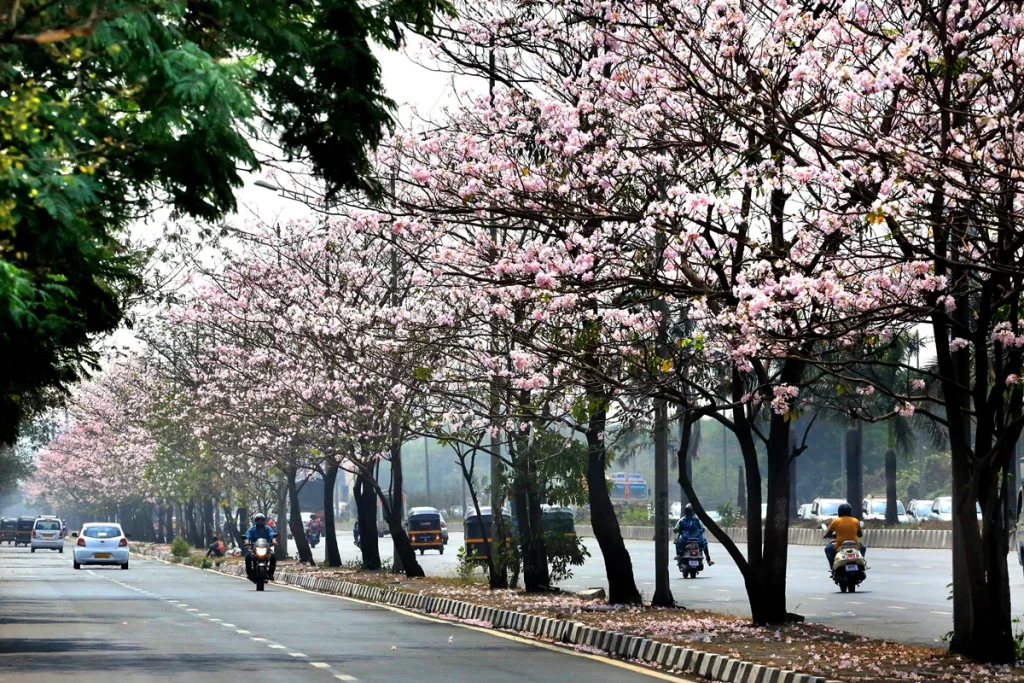
Starting in February, our Instagram feeds are flooded with photos and videos of pink flowers lining the leafless trees along Mumbai’s Eastern Express Highway. With hashtags and captions comparing scenes to Japan’s cherry blossom season, the city’s very own sakura is going absolutely viral. Mumbai‘s spring season has a headstart, with photographers and videographers rushing to take the best shot of the blooms before they disappear for another year. Nevertheless, it’s not new. Introduced by the BMC decades ago, these pink explosive blossoms show their face only for a few weeks at the start of spring, turning the highway into a dreamy corridor. Here’s everything you need to know about Mumbai’s very own “cherry blossoms”.
Cherry Blossoms in Vikhroli
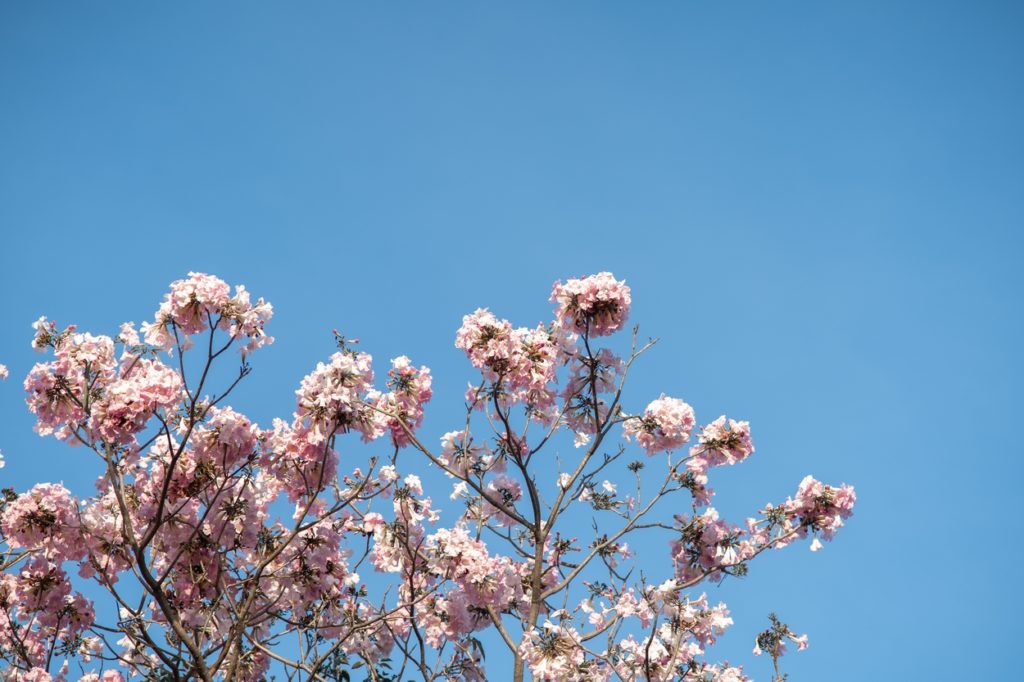
Unsurprisingly, although Mumbai’s “cherry blossoms” are taking over the internet, they are not actually cherry blossoms. The real ones require a much colder climate, making a city like Mumbai an unlikely home to the famous spring blooms of Japan. Instead, these blossoms are Pink Trumpet, or scientifically known as Tabebuia Rosea.
However, they are not native to Maharashtra or even to India. In fact, they come from Central and South America. Over time, they have found a second home in Mumbai’s coastal humidity. The BMC planted them as part of a city-wide beautification drive, mainly because these trees are low-maintenance and can thrive in the urban heat. What makes them so visually striking is their timing. Before they bloom, the trees lose most of their leaves, standing skeletal for a brief period. As spring ushers in, thousands of trumpet-shaped pink blossoms explode overnight. And, within days, soft pink cluster cover branches, and fallen petals dust the ground, creating a stunning stretch of colour along the highway.
Where and how to see them
Every year, the commuters along the Vikhroli-Ghatkopar stretch face the charming scenery that these trees provide. While it has attracted morning walkers and photographers for years, social media has turned it into a must-see moment. For a few weeks, a drive or walk through the stretches turns almost cinematic. The most popular views are along the Eastern Express highway near Godrej in Vikhroli, with rows of pink trumpet flowers along the highway.
Additionally, they have mushroomed across the city, such as near the Chhatrapati Shivaji Terminus, Borivali Gorai road, opposite Lion Gate in Fort, near Bombay Stock Exchange, Rani Baug, Mahim nature park, and the roads of Kharghar in Navi Mumbai.
How to get the best shot?
You may be tempted to get out of your car on the highway to shoot that perfect reel. However, to ensure you get your shots without a fine or safety hazards, we have some tips and tricks up our sleeve. The best time to visit the cherry blossoms in Vikhroli is early in the morning (6 AM to 8 AM) when traffic is less and the air is calmer. Moreover, with soft morning light and flowers coating the ground, the view is surreal. As the day progresses, the flowers often wilt due to traffic. Nevertheless, if you are lucky, you can still get a golden hour shot in the late afternoon before traffic runs its course again.
For a stunning bird’s-eye view, use the pedestrian overbridge to capture the sheer scale of the bloom. Furthermore, you can even take the service roads near Godrej or Kanamnagar Stretch. Under the blushing canopy, you get just enough space to park and walk.
Remember, the peak bloom starts from January 31 and lasts until the end of February. Being notoriously ephemeral, it lasts only for 3-4 weeks. Once the Mumbai heat takes over, the trees are back with their green leaves, awaiting the pink blooms until next year.
Note: The view is expected to be impacted by the MMRDA’s proposed elevated road project linking Ghatkopar to Thane. Along the stretches, over 51 trees are expected to be impacted by the corridor.