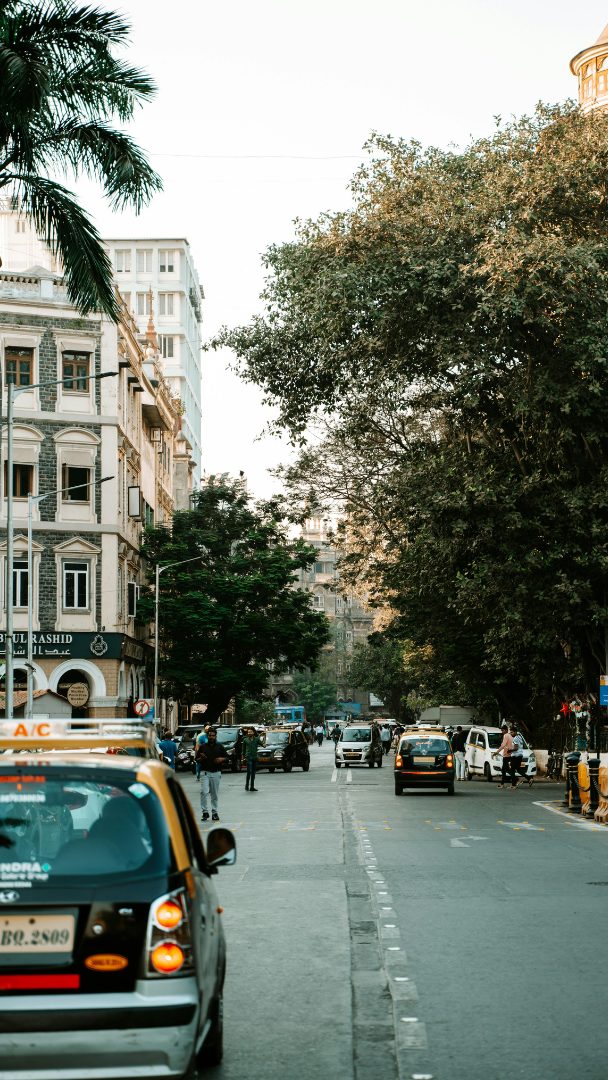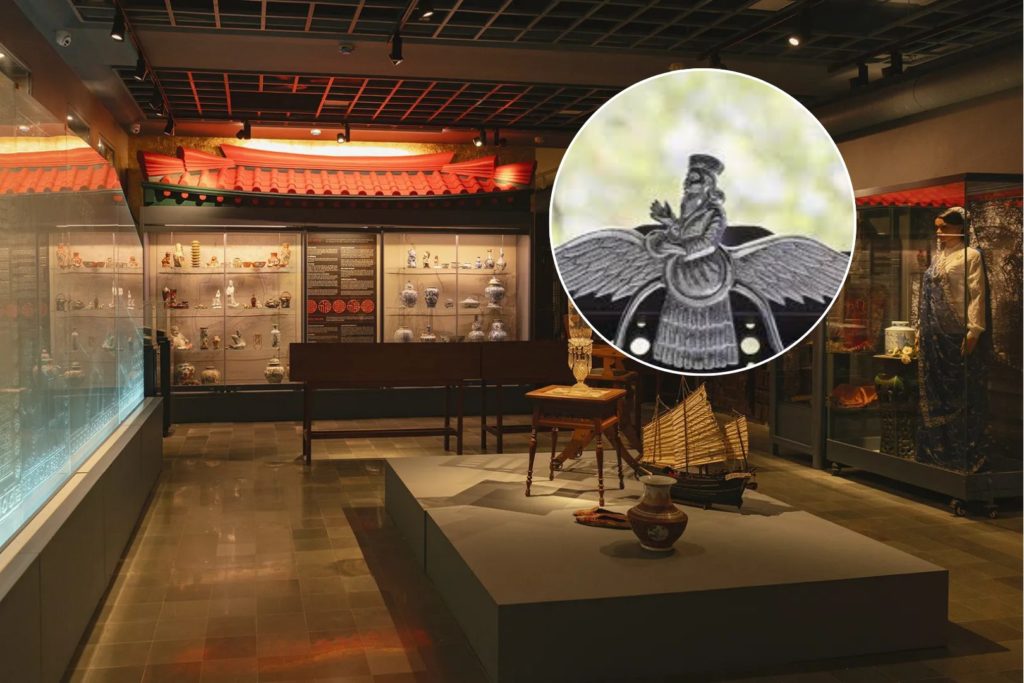
With its sprawling bungalows built in 1912, Khareghat Colony lies only a few metres away from the Babulnath temple. It is home to the smallest ethnic group in India, the Parsis. With their dwindling numbers, there are only about 50,000 to 60,000 Parsis left in the world. Yet, their rich heritage and culture are carried forward day by day in Mumbai. They have been crucial in building the city the way we know it today. Besides the erected war memorial statue to the soldiers of World War I, the colony hides a tranquil museum, the Framji Dadabhoy Alpaiwalla Museum (FD Alpaiwalla Museum). Also known as the Parsi Museum, Mumbai. This museum is dedicated to the heritage of Parsis and Irani Zoroastrians who have made their mark in the city and the country.
FD Alpaiwalla Museum – The Parsi Museum Mumbai
Finding refuge under a ruler in Gujarat, the Parsis fled Persia (present-day Iran) during the 8th and 10th centuries. Commonly considered to be the world’s first monotheistic religion, they were the practitioners of Zoroastrianism, settling in pockets of Gujarat and in Mumbai. Just like sugar in milk (as the story goes), Parsis have contributed significantly to the fabric of the country. While one cannot convert to Zoroastrianism, these practitioners have kept their centuries-old heritage alive through generations. However, not much is known or talked about this significant community. The FD Alpaiwalla Museum is a haven for those who wish to get a window into this close-knit community and an ode to the heritage of Parsis and Irani Zoroastrians.
What to see?
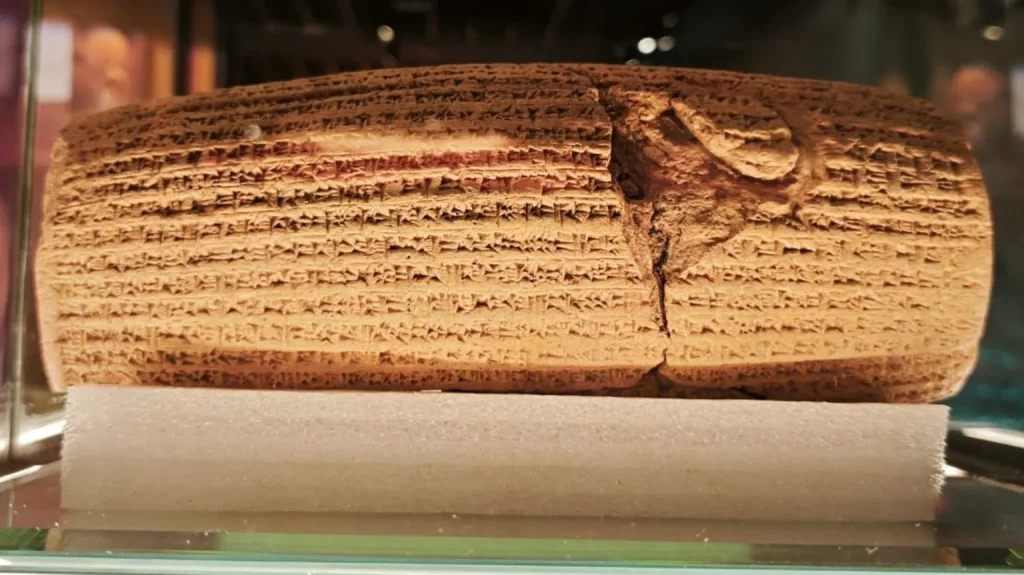
Established in 1954, the museum hosts rare artefacts from around the world from different epochs of history. Amongst them are cuneiform bricks, coins, and terracotta pots from Babylon, Mesopotamia, Susa, and Iran. These date back to 4000-5000 BCE when Achaemenian, Parthian, and Sasanian dynasties of Zoroastrian Iranian kings ruled the places. Moreover, there is also a replica of the famed Cyrus Cylinder belonging to the king, Cyrus the Great, who conquered Babylon in 539 BCE. While the original stands in the British Museum, the cylinder is often regarded as the first human rights charter, with an inscription in Akkadian cuneiform script promising the rights to Cyrus’ subjects in Babylon. With more coins and bricks inscribed in cuneiform script, it is essential to note that the script developed by the ancient Sumerians of Mesopotamia is one of the oldest writing systems.
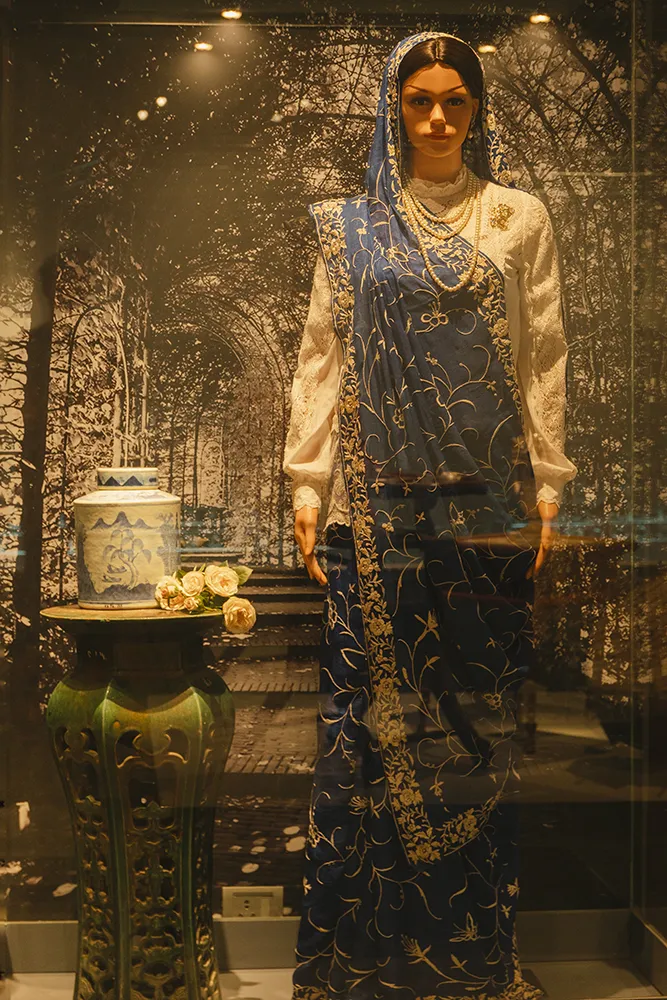
The maps along the walls trace the migration routes of thousands of Zoroastrians who travelled to India in the 8th to 10th centuries, and again in the 19th century. The collection highlights artefacts collected by wealthy Parsis who traded silk, cotton, tea, and even Opium with China. Additionally, a striking section shows an exhibit of exquisitely embroidered Parsi traditional garas (a type of saree) on fine silk and georgette, gifted by Chinese merchants. Along the walls, antique doors line up with teak cupboards and feature portraits of prominent Parsis, like the freedom fighter, Dadabhoy Naraoji and Jamsetji Nusserwanji Tata of the legendary Tata Group.
The Holy Fire and Tower of Silence
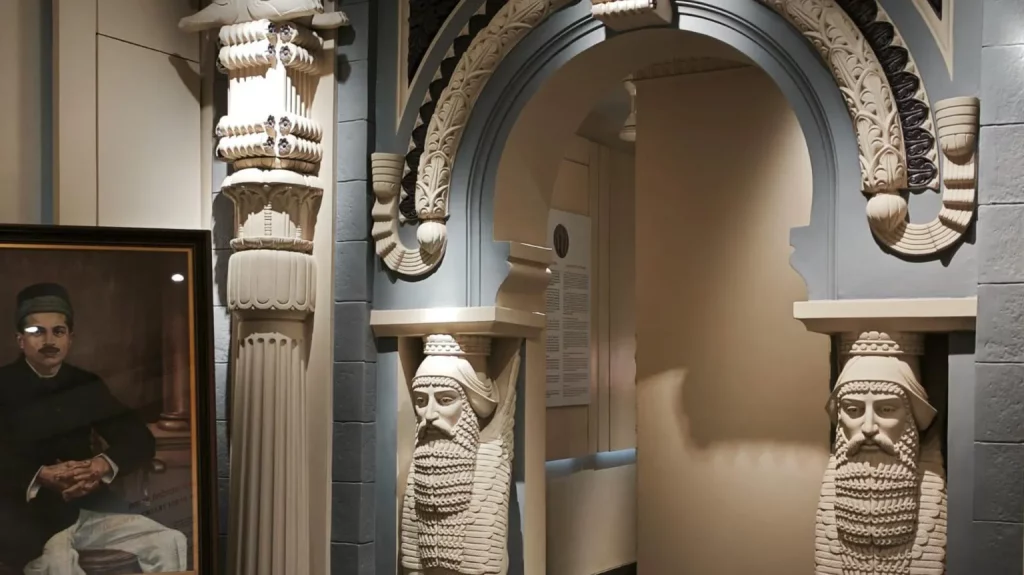
Fire is holy to the Zoroastrians. The museum depicts the journey of the Iranshah fire, the holy fire that travelled with the Parsis from Korasan in Iran to Udvada in India. Many pockets in Mumbai hide the holy fire temples (Agiary) and only allow entry to pure Parsis and Irani Zoroastrians. The museum houses an entire room replicating an actual fire temple for visitors. The facade takes inspiration from the Maneckji Sett Agiary in Ballard Estate. It is accompanied by a sensory recording of prayer recitations with a woody smell of sandalwood. Furthermore, there is also a replica of the Tower of Silence or dakhma, where Parsis leave their dead to return to nature. A notable piece on display is a Mesopotamian receptacle for the dead, from Yazd, Iran. The dead were laid in this baked clay structure to be consumed by scavenger birds and returned to nature. While non-Parsis cannot enter these towers, this replica describes and shows the traditional burial ritual.
Over the years, Parsis have contributed to the plethora of collections, preserving their heritage, tradition, and contributions to the Indian cultural diversity. Supported by the Bombay Parsi Punchayet and the Indian Ministry of Culture, the museum was restored and reopened to the public in 2025. Now, with a fresh new outlook and facade, the museum continues to host visitors with interesting treasures from the past and preserves the sacred identity of an albeit small but significant community in India.
Key Information
⏰Monday to Saturday (10:30 AM to 5:30 PM)
💵 Free (but carry an ID)
📍NS Patkar Marg, Khareghat Colony, Malabar Hill, Mumbai